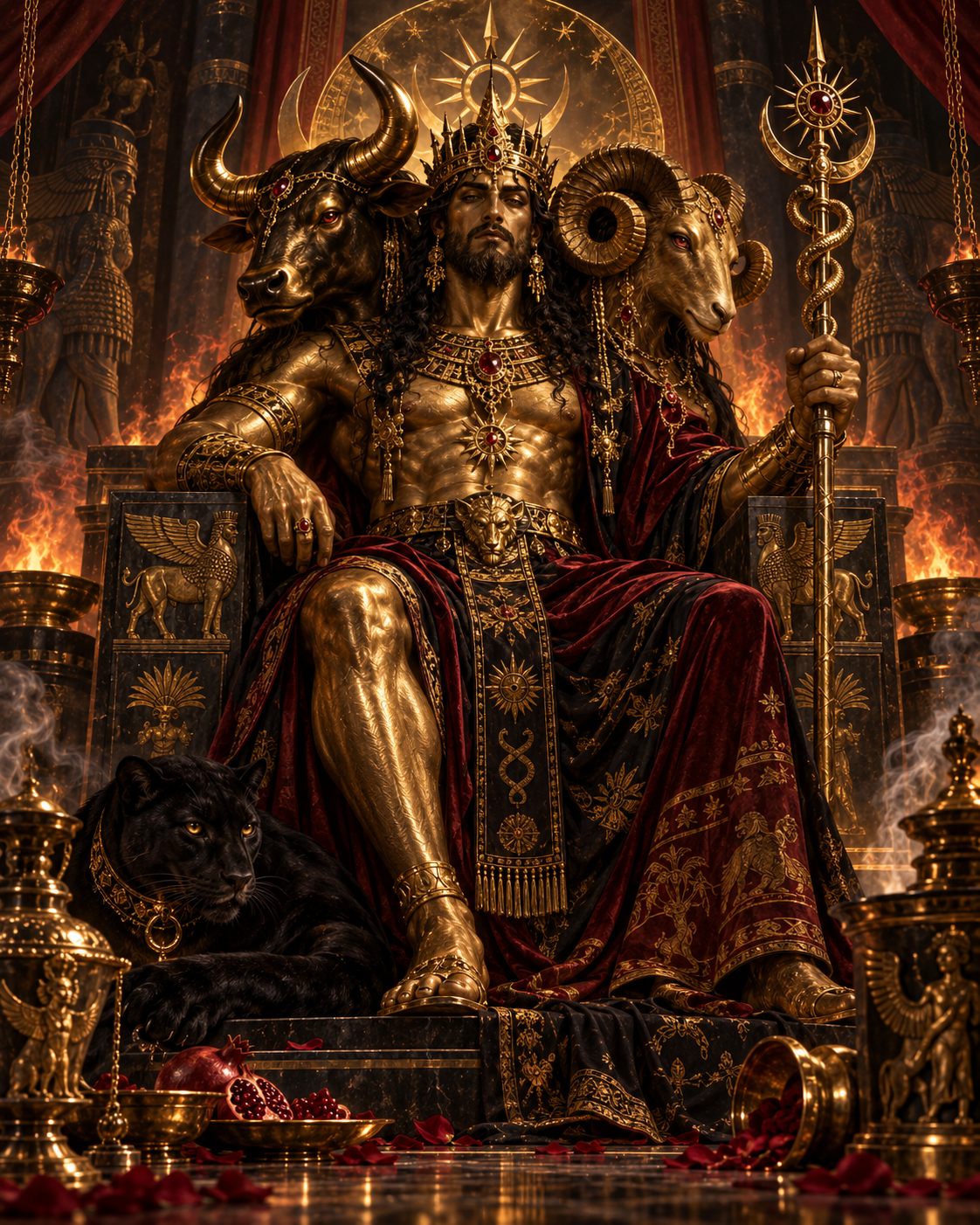
Asmodeus is too often reduced to rage, as if he were only a symbol of excess or destruction. But read as an image of the Self, he suggests something far more complete.
In the bull’s head, we see power: embodied force, virility, rooted presence, the strength to stand and impose reality. In the king’s head, we see cunning: sovereignty, intelligence, command, the Self made conscious and capable of directing its own energies. In the ram’s head, we see lust: not mere appetite, but eros as movement, hunger, pursuit, and the living fire that drives becoming.
Taken together, these are not fragments of vice, but a dark trinity of the integrated Self. Power without cunning is blind. Cunning without lust is sterile. Lust without power is helpless. But united, they form a being who is vital, self-possessed, and fully alive.
This is not the denial of instinct, but its enthronement. Not the rejection of desire, but its elevation into conscious force. In that sense, Asmodeus appears less as a caricature of sin and more as an image of the sovereign Self in its darker, fiercer fullness.